Hania El Hammamy Net Worth 2026 - Egypt's Young Powerhouse Is Already Building a Financial Empire
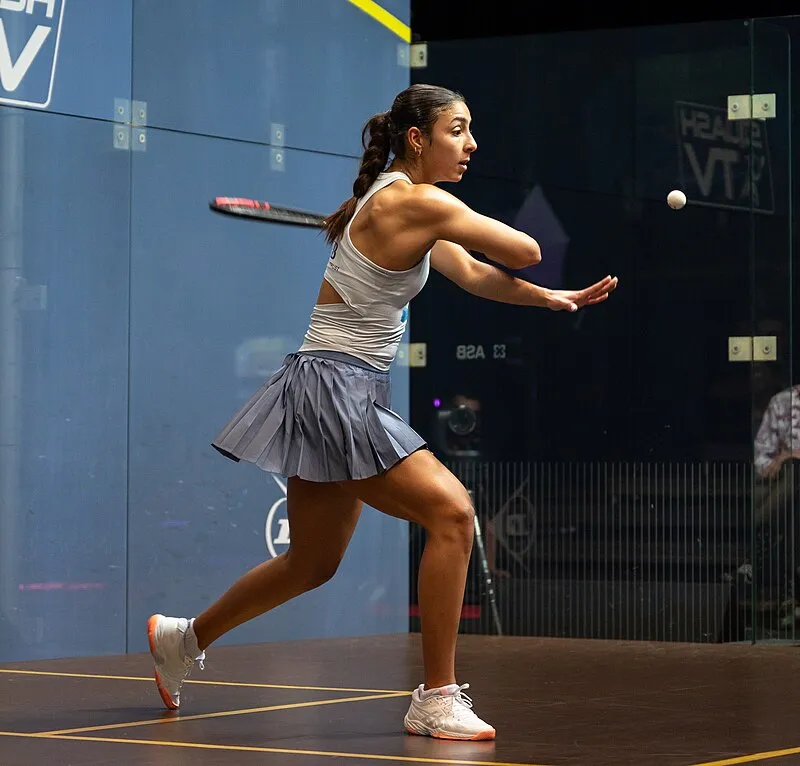
Photo of Hania El Hammamy, via Wikimedia Commons
Hania El Hammamy Net Worth 2026 - Egypt's Young Powerhouse Is Already Building a Financial Empire
There is a particular kind of athlete who arrives on the professional scene not merely as a competitor but as a commercial proposition. Hania El Hammamy is precisely that kind of athlete. Born in Cairo in 2002, El Hammamy turned professional at an age when most players are still navigating junior circuits, and she has since accumulated ranking points, tournament titles, and — critically — the financial infrastructure of a player who understands that a squash career is both a sport and a business.
As of 2026, Hania El Hammamy's estimated net worth stands at approximately $800,000 to $1.2 million, a figure that reflects her PSA prize money accumulation, endorsement agreements, social media monetization, and the broader commercial ecosystem that Egypt's elite squash infrastructure has helped her navigate. For a player still in the early phase of what promises to be a long and decorated career, the financial trajectory is strikingly upward.
Prize Money: A Rapidly Ascending Curve
El Hammamy's PSA earnings tell the story of a player who arrived quickly and has never stopped accelerating. After breaking into the top 10 of the women's world rankings, she secured consistent access to the sport's highest-paying events — the Platinum and Gold-tier tournaments that offer the most substantial prize pools on the women's tour.
Semi-final and final appearances at events including the CIB Egyptian Open, the Hong Kong Open, and the PSA World Championships have contributed meaningfully to her cumulative earnings. Industry analysts tracking PSA prize money distributions estimate that El Hammamy has accumulated between $350,000 and $500,000 in career prize money through 2025, with annual earnings in recent seasons ranging from $80,000 to $130,000 depending on her tournament results.
The trajectory matters as much as the absolute figures. Players who reach the top five of the women's world rankings — a threshold El Hammamy has repeatedly approached — access a tier of events where the differential between a first-round exit and a deep run can represent tens of thousands of dollars. Her ability to consistently reach the later stages of major events positions her for continued earnings growth.
Sponsorship Portfolio: Brands Are Taking Notice
In women's squash, sponsorship deals rarely approach the values seen in tennis or golf, but the most marketable players — those combining world-class results with youth, personality, and visual appeal — command agreements that provide meaningful income supplements. El Hammamy fits that profile precisely.
Her primary equipment relationship with a leading racket manufacturer provides both gear supply and a financial retainer estimated at $30,000 to $50,000 annually. Apparel partnerships add a further layer of income, with industry sources suggesting her clothing and footwear arrangements contribute an additional $15,000 to $25,000 per year.
Beyond equipment and apparel, El Hammamy has attracted interest from Egyptian corporate sponsors seeking association with the country's thriving squash culture. Egypt's national pride in its squash players — particularly its female champions — creates a domestic sponsorship market that international brands do not always recognize but that generates genuine commercial value for players of El Hammamy's stature.
Social Media: Monetizing the Modern Athlete's Platform
El Hammamy's social media presence represents one of the most underappreciated components of her financial profile. With a following that spans Instagram, TikTok, and YouTube — platforms where squash has found surprisingly engaged audiences among younger demographics — she has cultivated a personal brand that extends beyond match results.
Her content mix, which includes training footage, tournament travel documentation, and personal lifestyle glimpses, generates engagement rates that attract both platform-level monetization and direct brand partnership inquiries. Estimates from digital sports marketing professionals suggest that athletes with El Hammamy's following and engagement profile in niche sports can generate between $20,000 and $40,000 annually from combined platform revenue and sponsored content arrangements.
This digital income stream, while not yet dominant in her overall financial picture, is growing. As squash's global viewership expands — driven in part by PSA's improved streaming partnerships — athletes like El Hammamy who have invested in personal brand building stand to benefit disproportionately.
Egypt's Squash Infrastructure: A Financial Accelerator
One dimension of El Hammamy's financial story that American audiences may not fully appreciate is the structural advantage provided by Egypt's squash development ecosystem. The country has produced more world-ranked squash players per capita than virtually any other nation, and that concentration of talent has created a sophisticated support network that reduces the financial burden on individual players.
Access to world-class coaching, training facilities, and competitive sparring partners — often subsidized by the Egyptian Squash Federation and affiliated institutions — means that El Hammamy's operational costs are lower than those of players from countries with less developed squash infrastructure. Lower costs, combined with growing revenues, produce stronger net financial positions.
Additionally, Egypt's squash community has established pathways for elite players to transition into coaching, academy leadership, and federation roles following their playing careers — providing El Hammamy with a clear road map for income continuity beyond her competitive years.
Looking Ahead: The Long-Game Financial Strategy
At 23, El Hammamy is perhaps a decade away from contemplating retirement, but the financial decisions she makes now will shape her post-playing wealth significantly. Players who invest prize money earnings early — whether in real estate, equity markets, or business ventures — benefit from compounding returns that can dwarf their competitive income over a full lifetime.
Industry observers note that El Hammamy's management relationships appear sophisticated for a player of her age, suggesting awareness of these longer-term considerations. Conversations within the Egyptian squash community point to potential academy involvement and coaching certification as medium-term priorities — moves that would position her for income generation long after her final professional match.
For American squash fans watching the women's game evolve, Hania El Hammamy represents something genuinely exciting: a player building not just a career but a financial legacy, one tournament at a time. The numbers today are impressive. The numbers a decade from now could be remarkable.