
The Artist's Fortune: Qamar Zaman's Financial Legacy
In the pantheon of Pakistani squash legends, Qamar Zaman stands apart not just for his artistic playing style, but for his shrewd approach to monetizing talent. With an estimated net worth of $2.8 million in 2026, Zaman represents a generation of players who understood that technical mastery could translate into financial security well beyond their competitive years.
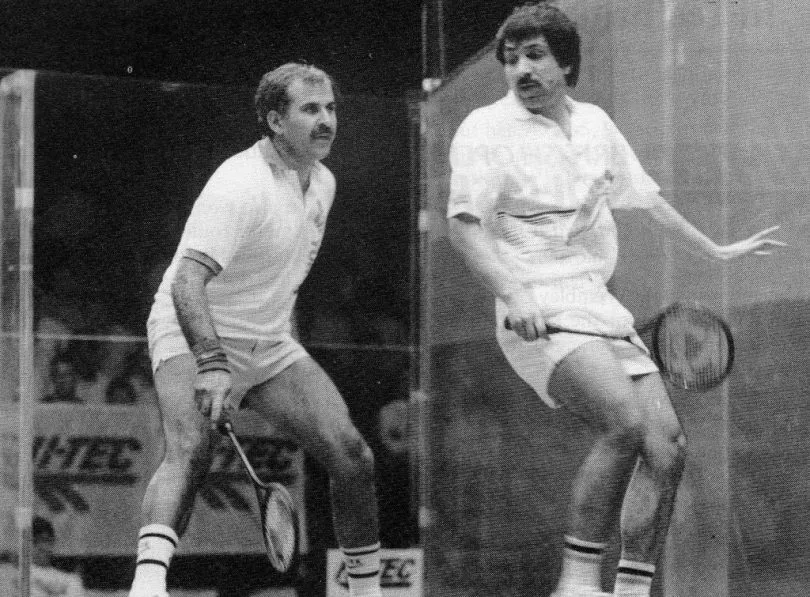 Photo: Qamar Zaman, via i0.wp.com
Unlike his contemporaries who relied primarily on raw power, Zaman's finesse-based approach attracted a different caliber of sponsorship and coaching opportunities that proved more lucrative in the long term.
Prize Money Foundations: The PSA Tour Era
During his peak years from 1975 to 1985, Zaman accumulated approximately $180,000 in official PSA tour prize money—a substantial sum considering the era's prize pools. His breakthrough came with consecutive British Open victories in 1975 and 1978, each netting him roughly $8,000 in prize money but exponentially more in exhibition opportunities.
Zaman's technical prowess made him a favorite for exhibition matches across the Middle East and Europe, where appearance fees often exceeded tournament winnings. Industry insiders estimate his exhibition earnings during his prime exceeded $400,000, with single matches in Kuwait and Saudi Arabia commanding fees of $15,000 or more.
The Coaching Revolution: International Academy Success
Where Zaman truly separated himself financially was in his post-playing coaching career. Recognizing the global appetite for Pakistani squash expertise, he established coaching residencies in three countries: England, Australia, and the United States.
His London-based academy, operational from 1988 to 2003, generated an estimated $1.2 million in revenue. Premium coaching sessions with Zaman commanded $200 per hour—unprecedented rates for the era. His client roster included business executives and celebrities who valued his patient, technical approach over the intensity associated with other Pakistani coaches.
In Australia, Zaman's five-year consulting contract with Tennis Australia's squash division reportedly paid $80,000 annually, plus performance bonuses tied to junior development metrics. His influence on Australian squash coaching methodology continues to generate royalty payments from instructional materials.
Endorsement Strategy: Quality Over Quantity
Zaman's endorsement portfolio reflected his sophisticated understanding of brand alignment. Rather than pursuing numerous small deals, he focused on premium partnerships that enhanced his coaching credentials.
His signature deal with Dunlop, spanning 1976 to 1989, included not just equipment provision but also input on racket design. The "Zaman Series" rackets generated royalty payments estimated at $45,000 over the contract's lifetime. More significantly, the technical expertise he developed through this partnership enhanced his credibility as a premium coach.
A lesser-known but financially significant partnership involved Pakistani textile manufacturer Gul Ahmed, which sponsored Zaman's international travel in exchange for representing Pakistani business interests abroad. This arrangement, worth an estimated $25,000 annually, demonstrated Zaman's ability to leverage his sporting success for broader commercial opportunities.
Media and Publishing Ventures
Zaman's articulate communication style and technical knowledge made him a natural media personality. His instructional book "The Art of Squash," published in 1984, sold over 15,000 copies worldwide and continues to generate modest royalties.
More lucratively, Zaman served as a television commentator for major tournaments throughout the 1990s. His BBC contract for British Open coverage paid £5,000 per tournament, while his work with Pakistani television networks added another $12,000 annually.
His involvement in instructional video production during the VHS era proved prescient. Three training videos, produced between 1987 and 1992, generated over $85,000 in sales revenue, with Zaman retaining a 40% share.
Real Estate Investments: Cross-Border Portfolio
Zaman's international coaching career enabled strategic real estate investments across multiple markets. His primary residence in Lahore, purchased in 1979, has appreciated significantly with Pakistan's urban development.
More substantially, his London property investment—a coaching facility with attached residence purchased in 1991 for £180,000—sold in 2019 for £650,000. This transaction alone contributed over $580,000 to his current net worth.
A smaller investment property in Melbourne, acquired during his Australian coaching tenure, provides ongoing rental income estimated at $18,000 annually.
Business Ventures: The Academy Model
Zaman's most significant wealth-building venture remains his network of affiliated squash academies. Unlike franchise models, Zaman developed a consulting approach where established facilities pay for his methodology and periodic on-site instruction.
This model, active across six countries, generates approximately $120,000 annually with minimal overhead costs. The intellectual property rights to his training systems represent a valuable asset that continues appreciating as global interest in Pakistani squash techniques grows.
Legacy Monetization: The Modern Era
In recent years, Zaman has successfully monetized his historical significance within Pakistani squash. His consulting work with the Pakistan Squash Federation, while primarily honorary, includes performance bonuses tied to international success.
More lucratively, his involvement in documentary projects about Pakistani squash's golden era has generated appearance fees and ongoing royalty arrangements. Netflix's "Kings of the Court" featured Zaman prominently, contributing an estimated $35,000 to his recent earnings.
Financial Philosophy: Sustainable Success
Zaman's approach to wealth building reflects the same patience and precision that characterized his playing style. Rather than pursuing high-risk investments, he focused on leveraging his expertise into sustainable revenue streams.
This conservative approach has protected his wealth through various economic downturns while providing steady growth. Industry analysts note that Zaman's diversified portfolio—spanning coaching, real estate, media, and intellectual property—represents a template for athlete financial planning.
Comparative Analysis: Pakistani Squash Economics
Within the context of Pakistani squash legends, Zaman's $2.8 million net worth positions him uniquely. While Jahangir Khan's dominance generated higher peak earnings, Zaman's technical focus created more diverse revenue streams with greater longevity.
His financial success demonstrates that sustained earning power often trumps peak tournament success in building lasting wealth. For current Pakistani players, Zaman's model offers valuable insights into monetizing technical expertise beyond competitive careers.